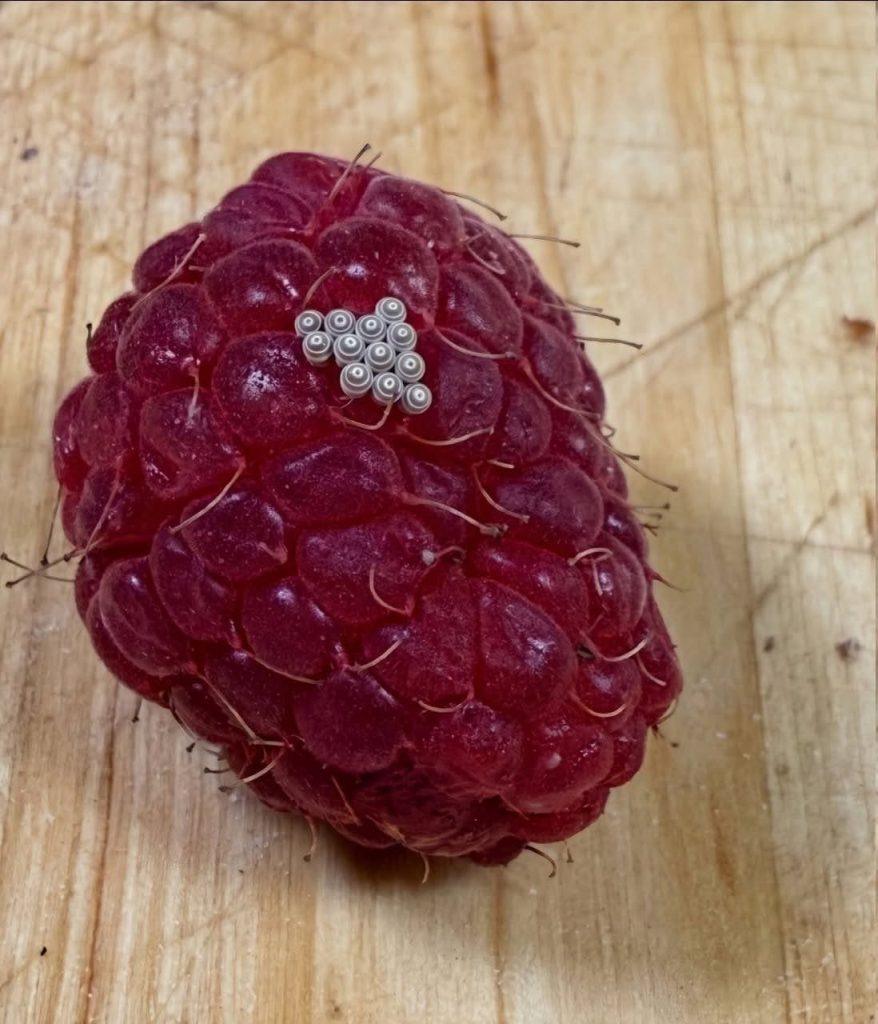
Why Tiny White Worms Sometimes Appear When You Soak Raspberries In Salt Water
What If You Still Feel Uncomfortable Eating Them?
For many people, seeing larvae emerge from their fruit is enough to make them lose their appetite. There is nothing unusual about choosing to discard the berries if you are uncomfortable with what you have discovered.
Another option is to use suitable berries in cooked preparations such as jams, sauces, pies, muffins, or other baked goods. Cooking can provide additional reassurance for consumers who prefer not to eat the fruit raw.
However, cooking should not be viewed as a way to rescue fruit that is already visibly spoiled or moldy. Fruit showing clear signs of deterioration should be discarded.
Why Are Soft Berries More Vulnerable?
Raspberries, blackberries, and other soft fruits have characteristics that make them more susceptible to insects and physical damage.
Their delicate surfaces can be easier for certain insects to penetrate or lay eggs in, while their high moisture content provides a suitable environment for microorganisms and insect larvae.
This is also one reason berries tend to have a shorter shelf life than firmer fruits. Even when they look perfect when purchased, their quality can decline quickly if they are stored improperly or kept for too long.
A Reminder About Where Fresh Produce Comes From
The discovery of larvae in berries can be unpleasant, but it also highlights an important reality about fresh food: fruits and vegetables come from agricultural environments where insects and other organisms naturally exist.
Modern farming practices, pest management, harvesting methods, refrigeration, and food-safety procedures help reduce these problems, but they cannot eliminate every possibility of insect contact.
Consumers can reduce their exposure to unwanted contaminants by purchasing fresh produce from reputable sources, inspecting it before eating, storing it correctly, and washing it properly.
Simple Steps for Fresher, Safer Berries
A few basic habits can help maintain the quality of raspberries and other delicate fruits:
- Inspect the berries before eating them. Look for mold, excessive softness, leaking juice, or unusual odors.
- Keep fresh berries refrigerated to slow spoilage.
- Rinse berries gently with clean running water before eating.
- Remove damaged or moldy berries as soon as you notice them.
- Avoid keeping washed berries for too long, since excess moisture can encourage deterioration.
- Use berries promptly while they are still fresh and firm.
The Bottom Line
Seeing tiny white larvae emerge from raspberries during a salt-water soak can certainly be shocking, but it does not mean the salt water created them or that something unusual happened during the soaking process.
In some cases, the organisms may be insect larvae that were already present inside the fruit and became visible after the berries were disturbed. Soft fruits such as raspberries and blackberries are naturally more vulnerable to certain fruit pests because of their delicate skin.
The best approach is simple: inspect your berries carefully, discard fruit that shows obvious signs of spoilage, rinse fresh berries properly, and store them under suitable conditions.
For consumers who prefer to avoid the possibility of encountering insect larvae altogether, cooking the berries before eating them can also be an appealing option. Ultimately, careful handling and good produce-washing habits can help you enjoy fresh berries while keeping food safety in mind.
