What’s Making Holes in Your Clothes? Causes and Easy Ways I Prevent Them
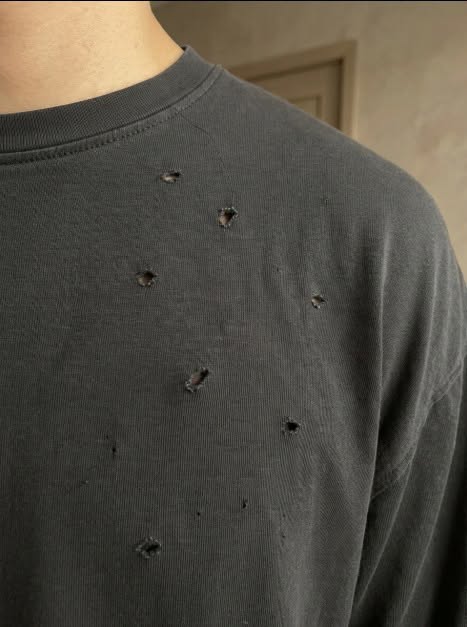
Have you ever reached into your closet for your favorite T-shirt, only to discover a tiny hole you could swear wasn’t there before?
And then you find another one.
Different shirt. Same mysterious little hole.
At that point, it’s tempting to blame the washing machine, the dryer, the laundry detergent—or maybe even some tiny creature living in your closet rent-free!
But before you start interrogating the entire laundry room, there’s something worth knowing: tiny holes in clothing can have several different causes, and the location of the damage can give you some surprisingly useful clues.
I’ve learned that the easiest way to solve the mystery is to stop looking at the hole itself and start looking at where it appears, what kind of fabric is affected, and what that clothing goes through every day.
And once you identify the culprit, preventing those holes can be much easier than you might expect.
If you’ve been wondering, “Why do my shirts keep getting tiny holes?”, let’s figure it out together!
If you enjoy practical household tips like this, subscribe by email so you don’t miss the next one.
Why Are Tiny Holes Appearing in My Clothes?
There isn’t one single explanation for damaged clothing.
Tiny holes can develop because of everyday friction, sharp surfaces, clothing hardware, laundry equipment, fabric wear, or—in some situations—insects.
Some of the most common possibilities include:
- Friction from countertops, desks, and furniture
- Belt buckles and pants buttons
- Zippers, hooks, and snaps
- Washing machine damage
- Dryer heat and tumbling
- Overloaded laundry loads
- Rough surfaces
- Delicate or weakened fabric
- Clothes moths
- Carpet beetle larvae
- Normal wear and tear
The good news is that the pattern of the holes can often help narrow things down.
Where the Hole Appears Matters
This is the first thing I look at whenever I find unexplained damage.
A hole in the lower front of a T-shirt tells a different story from several holes scattered across a wool sweater.
Tiny Holes Near the Bottom Front of Shirts
This is a particularly common mystery.
If your shirts keep developing tiny holes around the lower front, consider repeated friction.
Think about what that part of your shirt encounters during an ordinary day.
You might lean against:
- Kitchen counters
- Desks
- Tables
- Workbenches
- Bathroom counters
- Car interiors
- Chair edges
You may not even notice the fabric rubbing against the surface.
But if it happens hundreds of times, that repeated friction can gradually weaken the fibers.
Eventually, a tiny hole appears.
Holes Around Buttons or Zippers
If the damage is close to buttons, snaps, hooks, or zippers, clothing hardware deserves some attention.
A zipper with rough or damaged edges can catch fabric.
Buttons can rub against the surrounding material.
Hooks can snag neighboring garments in the laundry.
If the damage seems concentrated around these areas, inspect the garment before blaming your washer.
Holes Along Seams
A hole appearing directly along a seam may be related to normal wear, stressed stitching, or a seam that has started to weaken.
This isn’t quite the same as a random hole appearing in the middle of the fabric.
Look closely at whether the fabric itself has torn or whether the stitching is coming apart.
Multiple Holes in Stored Clothing
If you find several holes in clothing that has been sitting in a closet or storage container, especially wool or other animal-fiber garments, fabric pests become more worth investigating.
That doesn’t automatically mean moths.
But it does give you another clue.
Could Your Washing Machine Be Making Holes?
Yes, it can happen.
Washing machines contain moving parts, and a damaged or rough area can potentially snag clothing.
If you’re suddenly finding holes in multiple garments after washing, inspect the inside of the washer.
Look for:
- Rough or damaged surfaces
- Sharp edges
- Loose components
- Damaged agitators
- Objects trapped inside
- Areas where fabric could become caught
One simple check is to carefully run a nylon stocking or another delicate piece of fabric over accessible areas of the drum when the machine is off and completely safe to inspect.
If the material catches on something, you’ve found a possible problem.
For anything that requires opening the appliance or working around electrical components, it’s safer to have the machine inspected or repaired professionally.
Don’t Blame the Washer Too Quickly
see continuation on next page
