How To Collect & Grow Milkweed Seeds to Save the Monarch Butterfly
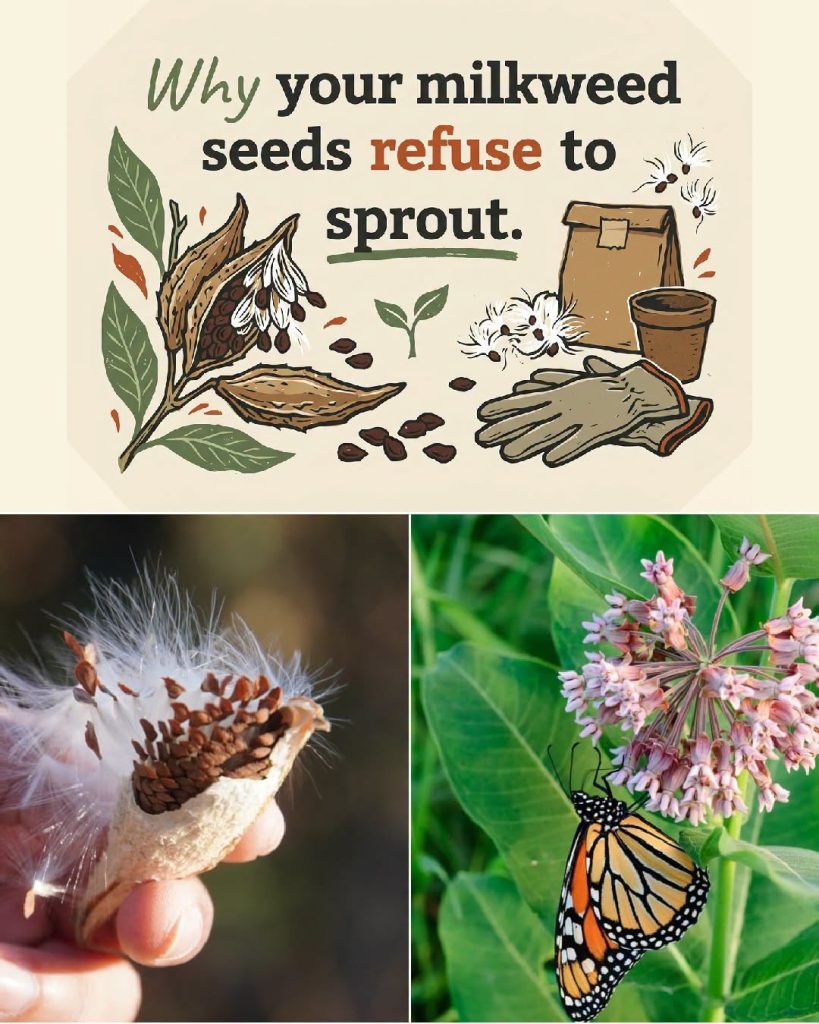
Ask any child over seven, and I’ll bet they can tell you what plant the Monarch butterfly eats.
At 43 years old, I still remember learning about the Monarch butterfly’s life cycle in Mrs. Potter’s second-grade class. The caterpillars eat milkweed, the only thing they eat in their larval stage.
Somehow, we forgot this lesson over the years, as we’re seeing a massive decline in Monarch butterfly numbers due to the loss of native milkweed. Folks everywhere, including many parents of seven-year-olds, are asking what they can do to help.
Luckily, it’s as easy as growing milkweed in your backyard.
What Happened to All the Milkweed?
Humans have this habit of labeling plants as good or bad on their usefulness to us. Usually, we make it our life’s mission to get rid of the bad ones – the weeds.
It’s only in the past few decades, as we’ve watched pollinators disappear at alarming rates and insect populations decline on the whole, that we’ve started to realize those plants are pretty important.
The three biggest culprits for milkweed loss are agricultural growth, urban development and roadside vegetation management. And most of this comes down to the abundant use of glyphosate, the most commonly used herbicide.
By far, the biggest culprit in the loss of milkweed is the agriculture industry through commercial farming.
No matter your views on eating GMOs, it’s clear their existence is causing environmental problems. Back in the late 1990s, my favorite corporation to hate on, Monsanto, released two brilliant new crops – glyphosate-resistant soybeans and glyphosate-resistant corn. The crops were genetically engineered to stand up to the herbicide application. So you could plant acres and acres of corn and soybeans and then spray those acres and acres with glyphosate and not have to worry about it destroying your crop.
Instead, it destroyed milkweed habitat, 120 million acres across the Midwest. Just by clearing and planting that land, we lost a lot of milkweed habitat. But by planting all that farmland with these genetically engineered crops and then spraying those fields year after year with glyphosate, we’ve made it nearly impossible for milkweed to grow in them.
“According to researchers, the utilization of these GE crops has all but eliminated milkweeds from these fields”
While that might be great if you’re a farmer, it isn’t very good if you’re a Monarch butterfly.
Milkweed is Important to More Than the Monarch
see continuation on next page
