How to Clean a Fan Without Taking It Apart: A Simple and Safer Method
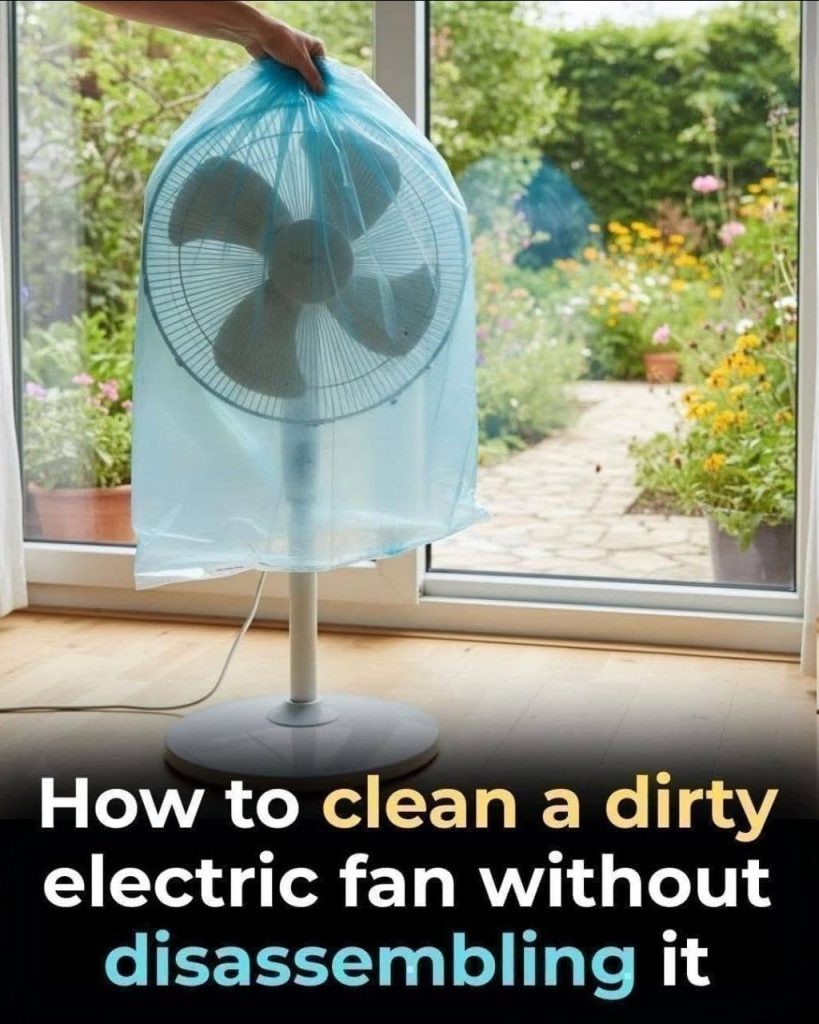
Rotate the Blades Only While the Fan Is Unplugged
If you need to reach another blade, gently rotate the blade assembly by hand only while the fan is disconnected from power.
Move slowly and avoid putting sideways pressure on the blades or motor shaft.
If the blades do not move easily or the grille prevents safe access, stop. Do not force the mechanism.
The biggest cleaning mistake is not leaving a little dust behind—it is pushing moisture or tools into the motor while trying to reach every last spot.
How to Remove Sticky Dust
Some fans collect a layer of dust that feels almost glued to the blades. This often happens when airborne grease, smoke, cooking vapors, or humidity combine with ordinary household dust.
Dry brushing may remove only the loose surface layer.
For accessible non-electrical surfaces, use a barely damp microfiber cloth with mild soapy water and allow it to sit against the grime for a short time before wiping.
Avoid repeated spraying. Direct spraying can send fine droplets through the grille toward electrical components.
Should You Use White Vinegar?
White vinegar is often promoted as an all-purpose household cleaner. It can help remove certain residues from washable surfaces, but it is not essential for cleaning a fan.
Because fans contain electrical components, simpler is often better.
If the manufacturer’s instructions permit damp cleaning, mild soap and water usually provide enough cleaning power for ordinary grease and dirt.
Do not pour vinegar into the fan, soak the grille while it is attached, or spray heavily around the motor.
Do You Need Disinfectant?
For routine household fan maintenance, removing accumulated dust and grime is usually the main objective.
Do not assume that spraying disinfectant through the grille is necessary or safe.
Some disinfectants can damage plastics, coatings, labels, or electrical components.
If you have a specific reason to disinfect a surface, follow the appliance manufacturer’s cleaning guidance and the disinfectant product’s directions.
The Popular Plastic Bag Fan-Cleaning Trick
Videos online sometimes show people spraying a cleaning solution onto a fan, placing the entire fan head inside a large plastic bag, and then switching the appliance on so the spinning blades supposedly clean themselves while the bag traps the dirt.
This method may look impressive on social media, but it introduces unnecessary safety concerns.
A running fan requires unobstructed airflow for normal operation and motor cooling. A plastic bag can interfere with ventilation, become caught in moving parts, or trap moisture around electrical components.
For that reason, sealing or covering a running fan with a plastic bag is not recommended.
Do Not Run a Wet Fan
Another common mistake is reconnecting the fan immediately after wet cleaning.
Even if the outer grille looks dry, moisture may still be trapped in small gaps.
After using any damp-cleaning method, leave the fan unplugged until all cleaned surfaces are completely dry.
Do not use the motor itself to “dry” the fan by switching it on.
Why Motor Ventilation Must Stay Clear
The motor produces heat while operating. Many fans are designed with ventilation openings that allow heat to escape and air to circulate around internal components.
Dust can gradually accumulate around these vents.
Use a dry brush or low-contact vacuuming method to remove visible exterior dust, but never push objects deep inside the housing.
Do not cover the motor vents with cloth, plastic, paper, or any other material while the fan is operating.
Can You Use Compressed Air?
Compressed air may seem like an easy way to blast dust out of a fan, but it should be used carefully if permitted by the manufacturer.
Strong air pressure can push dust deeper into the motor rather than removing it. It can also cause blades to spin rapidly when the fan is off, which may stress components.
If you use canned air on an appropriate appliance, use short controlled bursts and avoid spinning the blades at high speed.
A soft brush and vacuum can often provide more controlled dust removal.
Cleaning the Rear Grille
