Difference Between Green Onions, Scallions, Spring Onions and Chives
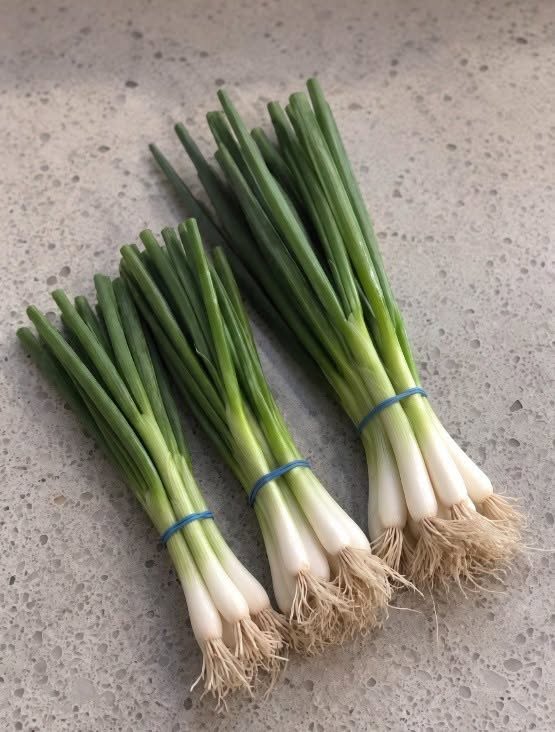
What Are Spring Onions?
Spring onions are young onions that have been harvested while they’re still relatively small, but they generally have a more developed bulb than green onions or scallions.
That bulb is the easiest visual clue.
A spring onion may look like a green onion that has started forming a small round onion at the bottom.
The flavor can also be more pronounced. The white bulb tends to have more onion bite, while the green tops remain fresher and milder.
Spring onions can be eaten raw or cooked.
Try them in:
-
- Salads
- Salsas
- Grain bowls
- Roasted vegetables
- Stir-fries
- Frittatas
- Soups
- Pasta dishes
- Savory tarts
And yes, the green tops are edible too!!
Are Spring Onions the Same as Green Onions?
Not necessarily.
This is where regional naming gets tricky.
Some people use spring onion as another name for a young green onion. In other contexts, spring onions specifically refer to young onions with a small, developing bulb.
That means the name alone isn’t always enough.
Look at the bulb. If there’s a clearly rounded, more developed bulb, you’re more likely looking at what many people call a spring onion.
What Are Chives?
Chives are the little green guys that often get mistaken for miniature green onions.
But they’re actually a different plant altogether.
Chives are an herb belonging to the allium family, the same broader plant family that includes onions and garlic.
They have:
-
- Very thin green stems
- Hollow, grass-like leaves
- A delicate onion flavor
- No substantial white stalk
- No large edible bulb
Their flavor is considerably more subtle than that of a raw green onion.
That’s why chives are often used as a finishing herb.
Snip them over baked potatoes, scrambled eggs, soups, creamy sauces, salads, dips, or roasted vegetables, and suddenly the whole dish tastes fresher.
Anything but boring!!
Green Onions vs. Scallions vs. Spring Onions vs. Chives at a Glance
Here’s the quick-reference version.
| Ingredient | Appearance | Flavor | Bulb | Best Uses |
|---|---|---|---|---|
| Green onions | White base with long green tops | Mild onion | Little or none | Stir-fries, salads, soups, garnishes |
| Scallions | Similar to green onions | Mild onion | Little or none | Same as green onions |
| Spring onions | Green tops with a more developed bulb | Stronger onion | Small, rounded bulb | Roasting, salads, cooking |
| Chives | Thin, hollow green stems | Delicate onion | No substantial bulb | Garnishing, eggs, dips, potatoes |
The simplest way to remember it?
Green onions = scallions in many recipes.
Spring onions = usually more bulbous and onion-forward.
Chives = thin, delicate herb.
What Do They Taste Like?
This is where the differences become really useful in the kitchen.
Green Onions and Scallions
They have a fresh, mild onion flavor.
The white portion is usually stronger and sharper, while the green portion is milder and slightly grassy.
Raw green onions add a crisp bite, but cooking mellows them considerably.
Spring Onions
Spring onions generally have a stronger onion character because the bulb has had more time to develop.
Depending on the variety and maturity, the flavor can range from mild and sweet to noticeably sharp.
They’re fantastic when cooked because the heat can bring out their natural sweetness.
Chives
Chives are the most delicate of the group.
Their flavor is lightly oniony, fresh, and grassy rather than intensely pungent.
They’re perfect when you want a hint of onion without making onion the star of the dish.
Can You Substitute One for Another?
see continuation on next page
