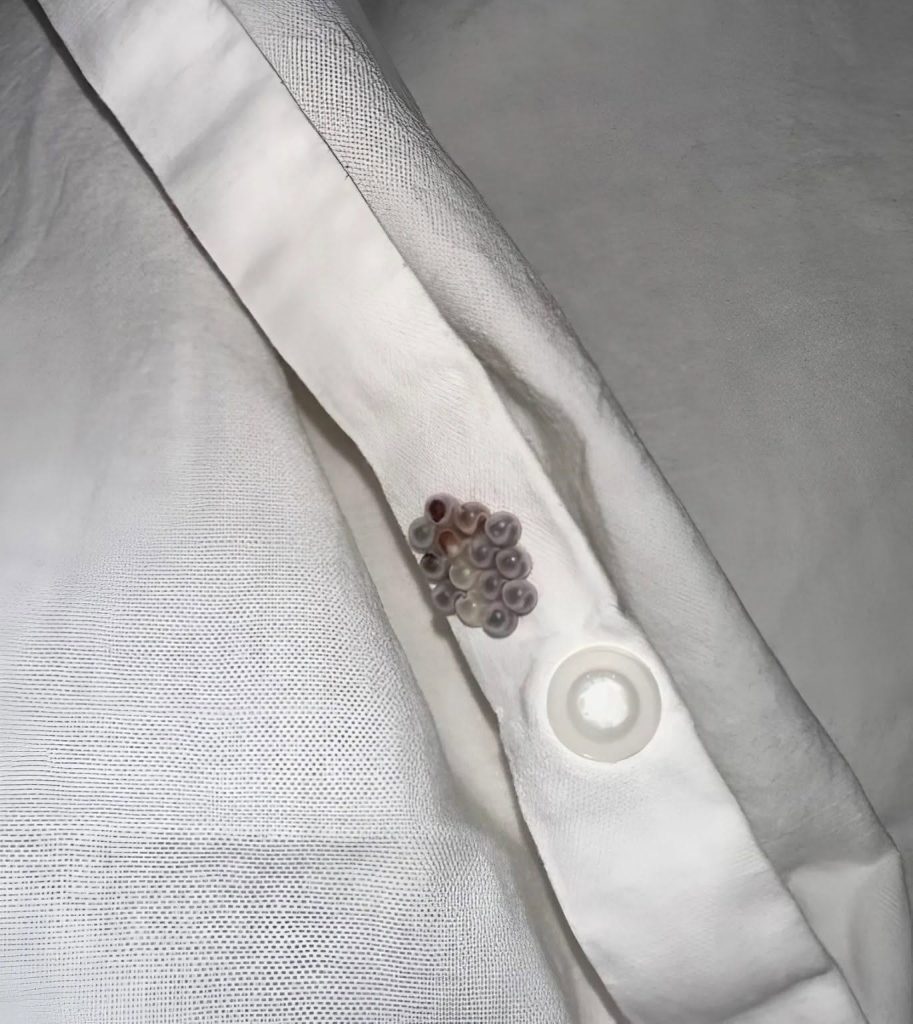
It was just a regular morning. The kind where you wake up slowly, still half-lost in dreams, stretching out under warm sheets and easing into the day. But for me, that peaceful start was about to take a sharp and unsettling turn.
As I lay in bed, slowly blinking myself awake, something odd caught my eye. There, just beside me on the sheet, were a few tiny round objects—perfectly shaped, almost too perfect. They were small, neatly arranged, and looked almost deliberate in how they sat there.
At first, I
had no idea what they were. Maybe crumbs? Beads from something? But as I leaned in for a closer look, a sudden chill went down my spine. These weren’t just random bits of debris.
They looked like eggs.

My heart jumped. Not chicken eggs, of course—these were tiny. And something about the way they sat there, like they’d been placed with intention, gave me the creeps. My very first thought was insect eggs. And not just any insect—something invasive, something uninvited.
I jumped out of bed. I didn’t touch them.
I didn’t even want to be in the same room with them. What kind of insect lays eggs on a person’s bed?
Turning Panic Into Action
Trying to keep calm, I did what anyone would do in this kind of situation: I grabbed my phone and started searching. I also messaged a few friends who are more outdoorsy and might know about bugs.
The internet can be both a blessing and a curse in these moments—just enough information to give you answers, and also just enough to scare you to
death.
Within a few minutes, I had my answer.
They were stink bug eggs.
I was stunned. I keep a clean home. I vacuum regularly, wash my sheets often, and try to stay ahead of anything that might attract pests. But despite all that, there they were—in my bed, no less.
How Did They Get There?
That was the next question. How on earth did stink bug eggs end up on my sheets?
After ruling out every possibility I could think of, I landed on one
hold. What if I’d been bitten? What if these bugs carried bacteria, or worse?
I didn’t want to take any chances. I made a same-day appointment with my doctor. After a thorough check-up and some precautionary tests, I was given the all-clear. No bites, no infections, and thankfully, no long-term risks.
Still, the fear lingered. I couldn’t stop thinking about what could have happened if I hadn’t seen those eggs, or if I’d rolled over them in my sleep.
A Hard Lesson Learned
The whole experience was like a slap
in the face—a reminder that no matter how clean or careful we think we are, nature has its own way of sneaking in. And sometimes, the warning signs are small, almost invisible, until they’re not.
Since that morning, I’ve made several changes:
I now scan my sheets every morning and evening.
I’ve added protective covers to my mattress and pillows.
I vacuum not just the floors, but also the mattress and under the bed weekly.

I inspect my dog’s fur carefully after every walk.
And I’ve
started using natural insect repellents around windows and door frames.
These shield-shaped insects, known for their distinctive smell when crushed, are invasive in many parts of the U.S., especially during late summer and fall.
They’re notorious for sneaking indoors as temperatures drop, seeking warmth in cracks and crevices. While they’re not dangerous to humans in the traditional sense—they don’t bite or sting—they can trigger allergic reactions, and they absolutely do not belong in your bedding.
The eggs, which are often found on the underside of leaves outdoors, are small, round, and laid in clusters. Finding them inside your home
should be taken seriously, as it could be a sign of a larger infestation.
How to Prevent a Similar Nightmare
If you’re a pet owner or live in a region where stink bugs are common, here are some preventive tips I wish I had known earlier:
Inspect your pets: After walks, especially in wooded or grassy areas, give your pets a quick brush down.
Seal your home: Check for cracks around windows, doors, and vents. Use weather stripping or caulk to seal gaps.
Install screens: Make
sure all your windows and doors have tightly-fitted screens without holes.
Use natural repellents: Essential oils like clove, mint, or citronella can deter bugs when sprayed around entry points.
to better protect my space, my health, and my peace of mind.
Now, when I climb into bed, I know I’m not just curling up under the covers—I’m stepping into a sanctuary I’ve made even safer, thanks to one strange little discovery that changed everything.

Leave a Reply