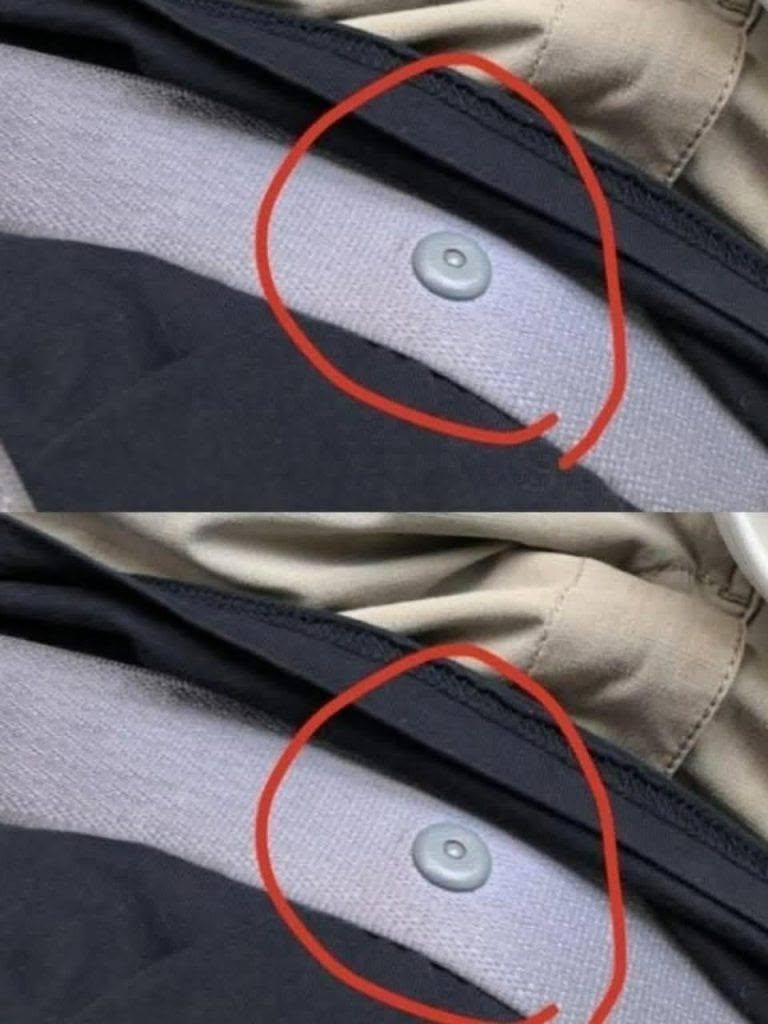
You do it every time you get in the car:
Slide the seat belt across your body… Click it into place… And go.
But have you ever noticed that small tab or lever near the base of the shoulder strap — often along the door frame or near the floor?
It’s not broken. It’s not loose. And it’s definitely not just plastic.
That tiny feature is an emergency seat belt release mechanism — a last-resort tool built into your car’s safety system.
Let’s uncover what it really does — so you can understand your seat belt better, stay safe, and know exactly what to do in a crisis.
Because real safety isn’t about guessing. It’s about knowing — before you need it.
It goes by several names:
- Seat Belt Retractor Release
- Emergency Webbing Release
- Manual Retraction Override
Located at the base of the shoulder belt retractor — usually on the B-pillar (between front and back doors) or near the floor.
This is not for daily adjustment. It’s a mechanical backup — only to be used when the seat belt fails to retract or release after an accident.
Under normal conditions, your seat belt works like this:
- The retractor uses a spring-loaded spool to keep the belt taut
- In a crash, the inertia sensor locks the belt instantly
Continued on next page:
But sometimes — especially after a collision — the seat belt may remain locked due to impact sensors being triggered.
That’s where the release lever comes in.
When pulled or pressed (depending on model), it:
Disengages the locking mechanism, allowing the belt to extend freely.
 This helps rescuers or occupants exit safely when the belt won’t unlock.
|
Scenario
|
Action
|
|---|---|
|
After a crash, belt won’t release
|
Pull the lever to free yourself or assist others
|
|
Vehicle submerged in water and belt is stuck
|
Use to gain movement and escape
|
|
During normal driving or braking
|
Never use — defeats safety system
|
|
To make the belt looser while driving
|
Dangerous — increases injury risk
|
Never tamper with this mechanism while the vehicle is in motion.
If the shoulder belt doesn’t fit well, don’t force the emergency lever.
Instead, look for the Seat Belt Height Adjuster — a different feature entirely.
Where to Find It:
- On the B-pillar, near the top of the shoulder strap
- Looks like a sliding bracket with a button or lever
How to Use It:
Continued on next page:
- Press the button or pull the tab
- Slide the anchor up or down
- Release to lock in place
Ideal fit:
- Shoulder belt crosses the center of the collarbone
- Not touching neck or slipping off shoulder
- Not pressing on arms or face
Adjust for each driver — one size doesn’t fit all.
|
Myth
|
Truth
|
|---|---|
|
“I can adjust my seat belt anytime using that button”
|
No — only the height adjuster should be used for fitting
|
|
“It’s okay to loosen the belt during long drives”
|
False — improper fit increases injury risk
|
|
“All cars have the same release system”
|
No — location and design vary by make/model
|
|
“Kids can play with it — it’s just a toy”
|
Dangerous — teach children it’s for emergencies only
|
Final Thoughts
You don’t need to fear the unknown parts of your car.
But you should understand them — especially the ones designed to save your life.
So next time you’re settling into your seat… pause.
Check your belt. Adjust the height. Respect the release.
Because real innovation isn’t flashy. It’s functional. And sometimes, it hides in silence — waiting for the moment you need it most.
And that kind of engineering? It deserves more than a glance. It deserves respect.

Leave a Reply