Woke up to this gross yellow pile of goo on my mulch bed. It looks like scrambled eggs or maybe vomit. It appeared overnight! What is going on?
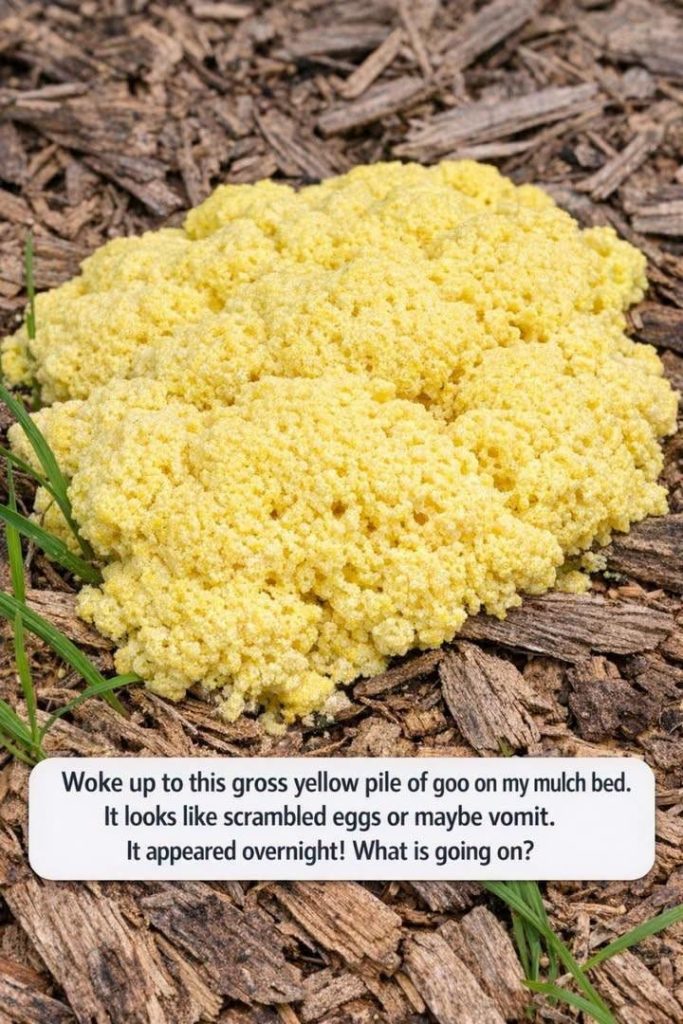
Imagine waking up in the morning, grabbing your coffee, and stepping outside to enjoy your garden, only to be greeted by a startling sight—a bright yellow, gooey mass sprawled across your mulch bed. It looks suspiciously like scrambled eggs, or worse, a puddle of vomit, and it seems to have appeared overnight. You’re left wondering what on earth could have caused this unsightly mess.
Before you panic or start blaming the neighborhood pets, rest assured you’re not alone. Many gardeners and homeowners have encountered this mysterious phenomenon, and there is a perfectly logical explanation for it. This article will delve into the details of what this yellow goo is, why it appears, and what you can do about it.
1. The Shocking Sight: Why Your Mulch Suddenly Looks Like Scrambled Eggs
The first time you encounter this yellow blob, it can be quite alarming. The vibrant color and odd texture resemble scrambled eggs, leading many to think it might be some form of animal waste or a peculiar type of fungus. This substance, however, is neither of those things. It can stretch across several inches, sometimes forming a patch as large as a foot in diameter, and it often appears overnight, adding to the mystery.
The sudden appearance is due to the nature of this organism’s life cycle, which we’ll explore further. It thrives in moist, shaded environments, which makes mulch beds an ideal habitat. This can be particularly noticeable after a period of rain followed by warm weather, conditions perfect for this organism to thrive and spread.
2. Meet Dog Vomit Slime Mold: The Surprisingly Common Culprit
The yellow goo you’re seeing is likely a type of slime mold known as Fuligo septica, commonly referred to as ‘dog vomit slime mold.’ Despite its unappealing name and appearance, it’s a natural and harmless organism. Slime molds are not fungi, bacteria, or plants; they belong to a separate kingdom of life, which makes them quite fascinating to scientists.
Dog vomit slime mold is particularly common in gardens where there are plenty of organic materials to feed on. It feeds on microorganisms in the decaying matter of your mulch, and although it may look unsightly, it doesn’t pose a threat to your plants or soil health.
3. Why It Appears Overnight And Loves Fresh Mulch Beds
Dog vomit slime mold can seem to appear out of nowhere because of its rapid growth under favorable conditions. The organism exists in a dormant state when conditions are not ideal, but as soon as moisture levels rise, it becomes active. This is why after a rainy night, you might wake up to see your mulch bed covered in yellow slime.
Fresh mulch provides a perfect environment for slime molds. It retains moisture and contains plenty of organic material to feed on. As the mulch breaks down, it releases nutrients that slime molds use to grow and reproduce.
4. Is It Dangerous? Health Risks To Pets, Kids, And Your Garden
Fortunately, dog vomit slime mold is not harmful to humans, pets, or plants. It doesn’t produce toxins or allergens, so even if your pet or child were to come into contact with it, there would be no adverse health effects. The mold itself does not cause plant diseases, nor does it damage the plants it grows around.
It’s perfectly safe to leave it alone, and it will eventually dry up and disappear on its own. However, if you find it particularly unsightly, there are ways to remove it, which we’ll discuss later.
5. How To Tell Dog Vomit Slime Mold From Fungus, Vomit, Or Animal Waste
Identifying dog vomit slime mold can be tricky if you’re unfamiliar with it. Compared to fungi, slime molds are more gelatinous and lack a defined structure, such as a cap or stem. They can vary in color but are typically bright yellow, orange, or even white.
Unlike animal waste, slime mold doesn’t have a foul odor. It also doesn’t attract flies in the same way as decomposing matter would. Its texture is more akin to a thick, wet sponge rather than the consistency of vomit or feces. Observing these characteristics can help you determine whether you’re dealing with a slime mold or something else.
6. What This Yellow Goo Is Actually Doing To Your Soil And Plants
see continuation on next page
